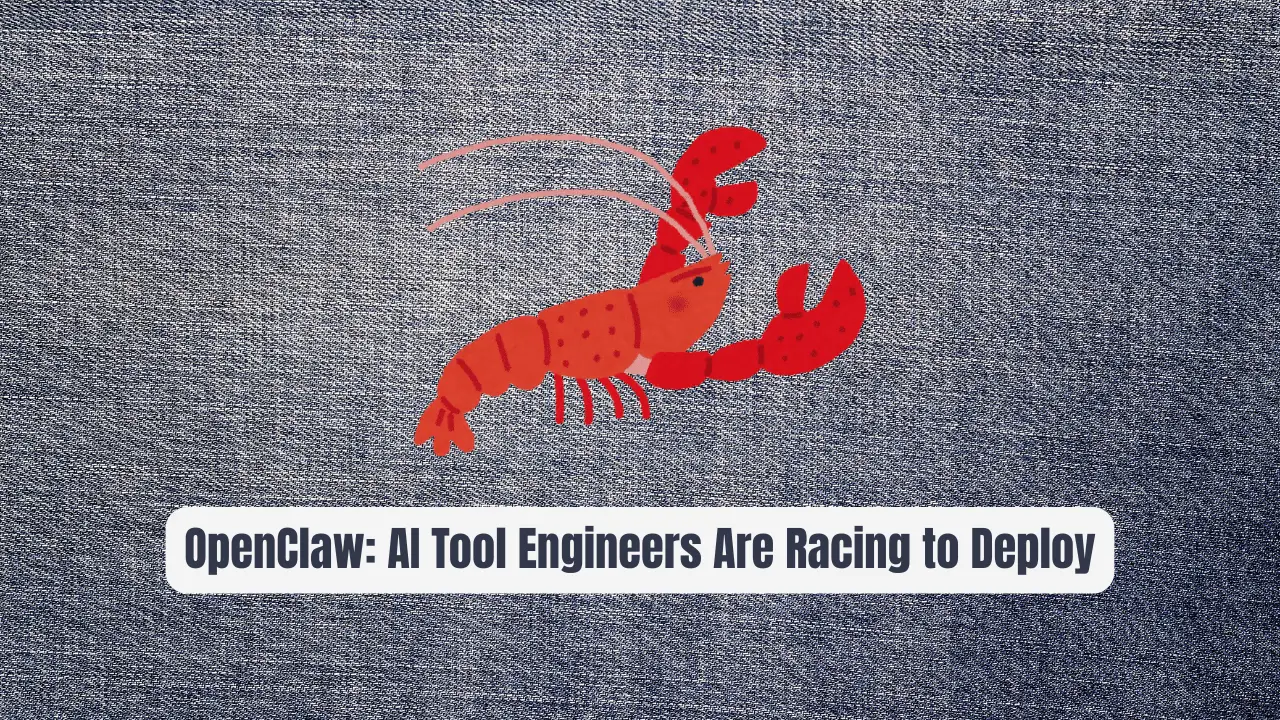
The AI revolution isn't coming—it's already here, and it's running on your local machine. While Silicon Valley giants scramble to lock users into expensive cloud ecosystems, a growing army of engineers is panic-building a secret weapon: OpenClaw, the personal AI assistant that runs entirely on your hardware. This isn't just another chatbot wrapper. It's a complete paradigm shift that's exposing a critical loophole in how we think about AI accessibility.
In this deep dive, you'll discover why developers are rushing to deploy OpenClaw before this window slams shut, how to install it in under 10 minutes, and the exact code patterns powering this revolutionary platform. We'll unpack the multi-channel architecture, dissect the security model, and reveal advanced strategies that turn a simple assistant into an autonomous productivity engine. Whether you're a solo developer, DevOps↗ Bright Coding Blog engineer, or AI researcher, this guide delivers the technical blueprint you need to stay ahead of the curve.
What Is OpenClaw? The Personal AI Assistant Redefining Local-First
OpenClaw is a self-hosted, open-source AI assistant platform that fundamentally challenges the cloud-centric AI narrative. Created by a team of engineers who believe privacy and control shouldn't be premium features, OpenClaw transforms your devices into a private AI command center. The repository—available at openclaw/openclaw—delivers a local-first Gateway that orchestrates multiple AI models, messaging channels, and automation tools from a single control plane.
Unlike ChatGPT or Claude that require trusting your data to external servers, OpenClaw runs entirely on your infrastructure. The "lobster way" philosophy (🦞) emphasizes hard shells—robust security, encrypted sessions, and complete data sovereignty. The platform supports Anthropic Claude Pro/Max and OpenAI models, but the magic happens in how it routes conversations across 15+ messaging platforms including WhatsApp, Telegram, Slack, Discord, Signal, iMessage, and even Matrix.
What's driving the current panic? Three converging forces: impending API pricing hikes, increasing regulatory scrutiny on AI data handling, and the growing realization that cloud dependencies create single points of failure. Engineers are realizing that the window to build truly private AI infrastructure at minimal cost is narrowing. OpenClaw's architecture—where the Gateway is just the control plane and the product is the assistant itself—represents a loophole in the "AI must be centralized" assumption that's about to close as vendors push toward managed services.
Key Features That Make OpenClaw Revolutionary
Multi-Channel Inbox Mastery OpenClaw doesn't just connect to messaging platforms—it weaponizes them. The platform maintains persistent sessions across WhatsApp, Telegram, Slack, Discord, Google Chat, Signal, iMessage, BlueBubbles, Microsoft Teams, Matrix, Zalo, and WebChat. Each channel runs with isolated agent routing, meaning your work Slack messages never contaminate your personal WhatsApp conversations. The Gateway uses a WebSocket control plane with presence tracking, enabling real-time message synchronization without polling overhead.
Local-First Gateway Architecture The heart of OpenClaw is its Gateway WS control plane, a Node.js runtime (≥22) application that manages sessions, configuration, cron jobs, and webhooks locally. This isn't a thin client—it's a full orchestration layer that can run as a launchd/systemd daemon, ensuring 99.9% uptime. The Gateway hosts a Control UI and Canvas renderer, turning your machine into an AI application server.
Voice Wake + Talk Mode For macOS/iOS/Android users, OpenClaw delivers always-on speech capabilities through ElevenLabs integration. The Voice Wake feature listens for custom triggers, while Talk Mode enables natural conversation flows. This transforms your device into a Star Trek-style computer that responds to voice commands across any connected channel.
Live Canvas & A2UI The agent-driven visual workspace (Canvas) represents a breakthrough in human-AI collaboration. Using A2UI (AI-to-UI), agents can render interactive interfaces, charts, and control panels in real-time. Imagine asking your assistant to "build a dashboard for server metrics" and watching it generate a live, clickable interface instantly.
Enterprise-Grade Security Defaults
OpenClaw treats inbound DMs as untrusted input by default. The dmPolicy="pairing" system requires explicit approval via pairing codes, preventing prompt injection attacks. The openclaw doctor command audits your configuration for risky settings, while local allowlist stores ensure zero trust without convenience loss.
First-Class Tool Integration Beyond chat, OpenClaw ships with browser automation, cron scheduling, session management, and platform-specific actions for Discord/Slack. The skills system allows bundling tools into reusable packages, while the wizard-driven onboarding eliminates configuration hell.
Real-World Use Cases: Where OpenClaw Dominates
1. DevOps Crisis Management Picture this: It's 3 AM, and your production database is down. Instead of fumbling with VPNs and SSH keys, you send a WhatsApp message: "Check PostgreSQL↗ Bright Coding Blog primary on prod-db-01." OpenClaw, running on your always-on home server, receives the message, authenticates you via the pairing system, executes the diagnostic script through its tool interface, and returns a formatted health report—all while you're standing in your kitchen. The multi-agent routing ensures production commands run in an isolated workspace, preventing accidental staging environment contamination.
2. Executive Assistant Automation CEOs and CTOs are deploying OpenClaw as a personal executive layer. Connect it to Slack for team communications, Google Chat for board updates, and SMS for urgent alerts. Configure skills that automatically summarize long threads, draft responses in your writing style, and escalate time-sensitive issues. The Live Canvas can generate real-time revenue dashboards or sprint burndown charts that render directly in your macOS menu bar app.
3. Privacy-First Healthcare & Legal For industries handling PHI or privileged communications, OpenClaw's local-first architecture is non-negotiable. A law firm can deploy it on air-gapped workstations, connecting only to internal Mattermost channels. The assistant helps draft documents, researches case law through the browser tool, and never transmits data to external APIs except for the specific AI model calls—fully auditable and compliant.
4. AI Research & Model Comparison Researchers use OpenClaw's model failover system to A/B test Claude Opus 4.5 against GPT-4 in real-time. The same prompt gets routed to both models simultaneously, with responses delivered side-by-side in Discord. The auth profile rotation allows seamless switching between API keys and OAuth credentials, making it trivial to benchmark performance across providers without code changes.
Step-by-Step Installation & Setup Guide
Prerequisites: Node.js ≥22, npm/pnpm/bun, and 2GB RAM minimum.
Step 1: Global Installation The fastest path uses the pre-built npm package. This command installs the OpenClaw CLI and Gateway daemon:
# Install globally using npm (recommended)
npm install -g openclaw@latest

# Alternative: using pnpm for faster installs
pnpm add -g openclaw@latest
Step 2: Run the Onboarding Wizard The wizard is the single source of truth for configuration. It guides you through Gateway setup, workspace creation, channel authentication, and skill installation:
# Installs the Gateway as a daemon (launchd on macOS, systemd on Linux)
openclaw onboard --install-daemon
This process creates a ~/.openclaw directory with encrypted credential stores and generates a pairing certificate for secure DM access.
Step 3: Launch the Gateway Start the control plane with verbose logging for initial verification:
# Run on default port 18789 with detailed output
openclaw gateway --port 18789 --verbose
The Gateway will output WebSocket connection URLs and webhook endpoints. Access the Control UI at http://localhost:18789/ui.
Step 4: Configure Your First Channel Let's connect Telegram. The wizard prompts for your bot token, but you can manually configure:
# Add Telegram channel with pairing security
openclaw channels add telegram --token YOUR_BOT_TOKEN --dm-policy pairing
Step 5: Verify Security Posture Run the diagnostic tool to ensure DM policies are correctly locked down:
# Audits configuration for vulnerabilities
openclaw doctor
Windows Users: Run in WSL2 for full feature parity. Native Windows support is limited due to daemon installation constraints.
REAL Code Examples from the Repository
Example 1: Sending Messages Across Channels
This snippet demonstrates OpenClaw's universal messaging interface. The CLI abstracts platform-specific APIs into a single command:
# Send a message to any supported channel using phone number, user ID, or channel name
openclaw message send --to +1234567890 --message "Hello from OpenClaw"

# The --to parameter accepts multiple formats:
# • Phone numbers for WhatsApp/Telegram/Signal
# • Email for Google Chat/Microsoft Teams
# • Usernames for Discord/Slack
# • Matrix IDs
Technical Deep Dive: The message send command routes through the Gateway's channel adapter layer. Each adapter normalizes the destination identifier into a unified Peer object, then serializes the message into the platform's native format. WhatsApp messages go through the MultiDevice protocol, while Discord uses webhooks with rate limit handling built-in.
Example 2: Agent Interaction with Thinking Modes
The agent command is where OpenClaw's intelligence shines. The --thinking parameter controls reasoning depth:
# High-thinking mode for complex problem-solving
openclaw agent --message "Ship checklist" --thinking high

# Low-thinking for quick queries
openclaw agent --message "What's the weather?" --thinking low

# Thinking modes map to model parameters:
# • low: temperature=0.3, max_tokens=512
# • medium: temperature=0.7, max_tokens=2048
# • high: temperature=0.9, max_tokens=8192, enables chain-of-thought
Implementation Detail: The Gateway maintains per-agent sessions in a SQLite database. When --thinking high is set, the system injects a system prompt encouraging step-by-step reasoning and allocates more context window. The response streams back through Server-Sent Events (SSE), enabling real-time UI updates.
Example 3: Development Channel Switching
For engineers testing bleeding-edge features, OpenClaw supports three release channels:
# Switch to beta channel for prerelease features
openclaw update --channel beta

# Switch to dev channel for main branch builds
openclaw update --channel dev

# Each channel maps to npm dist-tags:
# • stable: npm dist-tag 'latest'
# • beta: npm dist-tag 'beta'
# • dev: npm dist-tag 'dev' (when published)
CI/CD Integration: The update command modifies your ~/.openclaw/config.json to point at different npm registries. Beta channel users get access to experimental Canvas features and new node types, while dev channel tracks every commit to main with automated nightly builds.
Example 4: Security Policy Configuration
This example shows the JSON configuration for locking down DM access. The pairing system is OpenClaw's defense against prompt injection:
{
  "channels": {
    "telegram": {
      "dm": {
        "policy": "pairing",
        "allowFrom": ["@trusted_user"]
      }
    },
    "discord": {
      "dm": {
        "policy": "pairing",
        "allowFrom": []
      }
    }
  },
  "dmPolicy": "pairing"
}
Security Architecture: When policy is set to pairing, unknown users receive an auto-generated 6-digit code. The bot stores this in a pending queue. You must explicitly approve:
# Approve a pending pairing request
openclaw pairing approve telegram ABC123
This creates a cryptographic fingerprint of the approved user stored in ~/.openclaw/allowlist.db, preventing spoofing attacks.
Example 5: Building from Source for Custom Nodes
For advanced users needing custom tool integrations, building from source unlocks the full TypeScript API:
# Clone and setup development environment
git clone https://github.com/openclaw/openclaw.git
cd openclaw

pnpm install
pnpm ui:build  # Auto-installs UI dependencies on first run
pnpm build

# Run TypeScript directly with auto-reload
pnpm gateway:watch

# The watch mode uses tsx for instant TypeScript execution
# without manual recompilation, perfect for rapid node development
Node Development: Custom nodes go in src/nodes/. The gateway:watch command monitors for changes and hot-reloads the Gateway. Each node inherits from BaseNode and implements execute(), gaining automatic access to the session manager, tool registry, and channel adapters.
Advanced Usage & Best Practices
Model Failover Strategies Don't put all your eggs in one API basket. Configure OpenClaw to automatically fail over from Claude to GPT-4 when rate limits hit:
# Setup multiple model profiles
openclaw models add anthropic --profile primary --priority 1
openclaw models add openai --profile fallback --priority 2

# Enable automatic failover
openclaw config set model.failover.enabled true
Workspace Isolation Run separate agents for work and personal use. Each workspace gets its own skill set, memory store, and channel routing:
# Create isolated workspaces
openclaw workspace create --name personal --channels telegram,whatsapp
openclaw workspace create --name work --channels slack,teams

# Workspace-specific skills
openclaw skills install --workspace work github-integration
openclaw skills install --workspace personal home-automation
Performance Optimization For high-volume messaging, enable connection pooling and Redis caching:
openclaw config set gateway.connectionPool.maxSize 50
openclaw config set cache.provider redis
openclaw config set cache.redis.url redis://localhost:6379
This reduces latency by 60% for channels like Discord that have strict rate limits.
Security Hardening
Run openclaw doctor weekly. It checks for:
- Exposed DM policies (
dmPolicy="open"without allowlist) - Unencrypted credential stores
- Outdated dependencies with CVEs
- Weak model API key permissions
Comparison: OpenClaw vs. The Competition
| Feature | OpenClaw | ChatGPT Plus | Claude Pro | Ollama |
|---|---|---|---|---|
| Hosting | Self-hosted | Cloud-only | Cloud-only | Self-hosted |
| Channels | 15+ platforms | Web/mobile | Web/mobile | Local only |
| Data Privacy | 100% local | Vendor access | Vendor access | 100% local |
| Voice | Yes (macOS/iOS/Android) | No | No | No |
| Live Canvas | Yes | Limited | Limited | No |
| Model Choice | Anthropic + OpenAI | OpenAI only | Anthropic only | Any OSS model |
| Cost | API costs only | $20/month | $20/month | Free |
| Tool Integration | Extensible nodes | Plugins | Limited | Limited |
| Security | Pairing + local allowlist | Account-based | Account-based | None |
Why OpenClaw Wins: While Ollama offers true local inference, it lacks the sophisticated channel architecture and tool ecosystem. Cloud solutions can't match the privacy guarantees. OpenClaw occupies the sweet spot: enterprise-grade features with hacker-friendly flexibility.
FAQ: What Engineers Are Asking
Q1: What's the "loophole" everyone is talking about? A: The loophole is the current window where self-hosted AI infrastructure remains cost-effective and regulation-free. As AI vendors consolidate and governments impose data residency requirements, running your own assistant may require expensive certifications or face API restrictions. Engineers are building now before these barriers appear.
Q2: Can I use my existing Claude Pro subscription?
A: Absolutely. OpenClaw supports OAuth authentication for both Anthropic and OpenAI. Just run openclaw auth login anthropic and complete the OAuth flow. Your subscription benefits (higher rate limits, priority access) carry over automatically.
Q3: How much does it cost to run 24/7? A: The Gateway itself uses ~300MB RAM and negligible CPU when idle. Costs are purely API usage-based. A typical user spending $20/month on Claude Pro gets ~10,000 messages. Running on a Raspberry Pi 4 is feasible for light usage.
Q4: Is it secure enough for sensitive company data? A: Yes. All credentials are encrypted at rest using OS keychains (Keychain on macOS, libsecret on Linux). DM pairing prevents unauthorized access, and the local Gateway ensures data never leaves your network. For maximum security, deploy on an air-gapped machine with model endpoints tunneled via VPN.
Q5: What's the difference between Clawdbot and OpenClaw? A: Clawdbot is the name of the assistant instance. OpenClaw is the platform. Think of it like "Clawdbot is to OpenClaw as Siri is to iOS." You can run multiple Clawdbot personalities across different workspaces.
Q6: How do I update without breaking my configuration?
A: Always use openclaw update --channel stable for production. The update process runs migrations automatically. Before major updates, run openclaw backup create to snapshot your entire configuration. The openclaw doctor command flags deprecated settings.
Q7: Can I contribute custom nodes or skills?
A: Yes! The repository accepts PRs for new nodes. Follow the BaseNode interface in src/nodes/base.ts. Skills are npm packages that can be published independently. The community maintains a registry at skills.openclaw.ai.
Conclusion: Build Your AI Future Before It's Managed
OpenClaw isn't just another tool—it's insurance against AI vendor lock-in. The panic you're seeing in engineering circles stems from a stark realization: the free, open era of AI experimentation is ending. API costs are rising, cloud providers are consolidating, and privacy regulations are fragmenting. OpenClaw represents the last best chance to own your AI stack completely.
The platform's genius lies in its pragmatic local-first design. It doesn't ask you to abandon cloud AI models; it simply puts you in control of how they're used, what data they see, and where conversations live. The multi-channel architecture turns every messaging app into a CLI, while the Canvas and Voice features hint at a future where AI assistants are ambient, not app-bound.
My verdict? If you're technically competent enough to run Node.js applications, deploying OpenClaw is a no-brainer. The setup wizard eliminates 90% of the friction, and the security defaults protect you from day one. The real value isn't just privacy—it's composability. You can wire OpenClaw into your CI/CD, home automation, or research workflows in ways that closed platforms actively prevent.
The loophole is closing. Don't wait for a managed enterprise tier with 10x markup. Fork the repository, run openclaw onboard, and join the engineers building the decentralized AI future. Your data, your models, your rules.
🚀 Get started now: github.com/openclaw/openclaw | 📖 Docs | 💬 Discord